
Terry Hekker, the Woman Who Gave Everything and Had to Rebuild.

Updated: Oct 2

Choosing to be a stay-at-home mother is one of the most noble sacrifices a woman can offer her family. But have you ever stopped to think about what would happen to you if your husband left? If he lost his job? Or, though we rarely dare to imagine it, if he passed away? What would you do then? Have you considered yourself not only as a mother, but as an individual? Are you truly comfortable with your entire existence depending on another person?
Now, you may feel there is absolutely no reason to worry about your future. You trust him. He has always shown you that you are safe. Maybe your family is financially secure, or you have a prenup, or you simply know in your heart that he would never harm you, abandon you, or leave you unprotected. And those feelings of security are real, valid, and deeply comforting.
But even in the strongest, happiest marriages, even when everything points to lifelong stability, life remains unpredictable. Preparing yourself does not mean doubting him or your relationship. It means valuing yourself enough to ensure your well-being under any circumstance.

Terry Hekker was, for many years, the public face of the proud stay-at-home wife and mother. In the late 1970s, she published Ever Since Adam and Eve, a book that celebrated homemaking at a time when society was shifting toward dual-income families and professional ambition for women. Her message was simple and heartfelt: raising children, keeping a home, and supporting a husband was not a lesser life — it was a meaningful, dignified calling.
"They took pride in a clean, comfortable home and satisfaction in serving a good meal...."
She spoke from experience. Terry devoted decades to her family, raising five children, volunteering in her community, and pouring her energy into creating a stable home. She believed in the partnership she had built. She believed in the promises of marriage. And she thought that the sacrifices she made would be honored and protected for the rest of her life.
Her book struck a chord. She became a symbol of the traditional homemaker, appearing in interviews, essays, and discussions about the “right” way for a woman to build a fulfilling life. For years, Terry defended the idea that staying home was not only enough it was noble.
But life has a way of rewriting the stories we think are finished.
After forty years of marriage, on the day of their 40th wedding anniversary, Terry’s husband served her with divorce papers. He left her for a younger career woman. Overnight, the foundation she had relied on collapsed. The security she believed she had earned through a lifetime of devotion vanished. Suddenly, she found herself alone, financially vulnerable, and without marketable job skills after decades outside the workforce.
The shock was not only emotional, it was practical. She had no career to fall back on, no financial independence, and no real preparation for the world she now needed to navigate. While her ex-husband took vacations with his new partner, Terry found herself selling her engagement ring to pay for basic home repairs. The life she had devoted herself to — the life she had defended publicly- had left her without a safety net.
" He got to take his girlfriend to Cancun, while I got to sell my engagement ring to pay the roofer."
This turning point reshaped her worldview. With honesty and painful clarity, she began writing about the hidden risks of devoting your entire identity and economic future to someone else. The book was titled " Disregard First Book". She acknowledged that her earlier book, once a proud anthem of traditional housewifery, now held “little relevance for modern women, except perhaps as a cautionary tale.”
"They took pride in a clean, comfortable home and satisfaction in serving a good meal. No one had explained to them that the only work worth doing is that for which you get paid."
This post is not a condemnation of stay-at-home motherhood!
Terry did not regret her children, her marriage, or the years she spent caring for her family. What she regretted was not preparing for herself. She later said:
" If I had it to do over again, I'd still marry the man I married and have my children.
But I would have used the years after my youngest started school to further my education. I could have amassed two doctorates using the time and energy I gave to charitable and community causes and been better able to support myself."
Luckily, Terry Hekker’s story had a happy ending. It did not end with the collapse of her marriage or the shock of starting over in her mid-60s.
Instead, she built an entirely new chapter of her life, one she never could have imagined during the years she spent ironing shirts, packing lunches, and hosting family dinners.
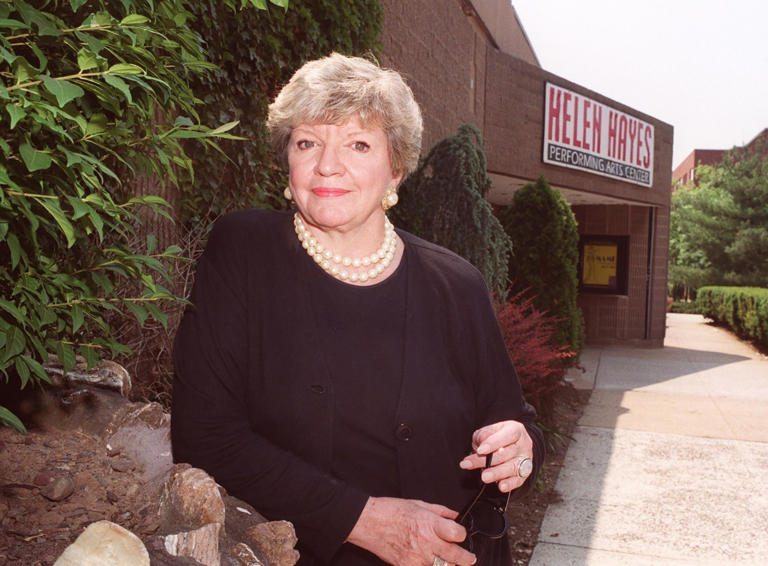
Long before her divorce, Terry had been quietly involved in her community: volunteering, serving on local committees, building relationships, and learning how her town worked.
What she once viewed as “just volunteer work” turned out to be the very foundation that allowed her to reinvent herself.
Those years of unpaid service became experience. Those connections became opportunities. Those skills became leadership.
And so, in 1994, Terry Martin Hekker made local history. She became the first woman elected mayor of Nyack, New York.
A former housewife, once known for defending the traditional role of the homemaker, stood at the helm of her village, overseeing public projects, securing funding for affordable housing, revitalizing the downtown area, and shaping the future of her community. She turned pain into purpose. Loss into leadership. Vulnerability into strength.
Terry Hekker is my ideal vision of a Stay-At-Home Mom, a woman who was far more than her domestic role. She wasn’t “just a mom,” she was a writer, a volunteer, a community builder, and ultimately a leader. She embodied the truth that motherhood does not erase a woman’s identity; it can expand it. Terry showed that a stay-at-home mother can be multiskilled, intellectually engaged, active in her community, and deeply connected to the world beyond her front door. Her life proves that you can pour your heart into your family while still nurturing your own talents, ambitions, and purpose.
Thank you, Terry, for the lessons your life gave us. Rest in peace, your story stands as a guide and a warning for generations to come.

Comments